Species interactions critical to restoration success in an urban living shoreline
Abstract
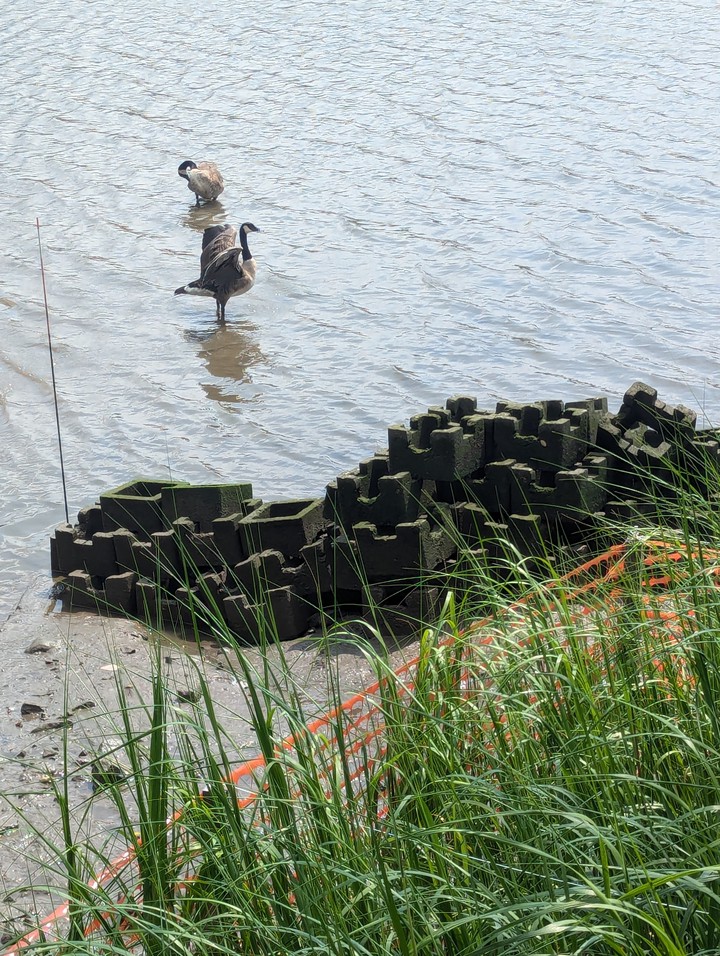
Nature-based methods for shoreline erosion control, often referred to as living shorelines, can help maximize local ecosystem services in urban areas where they may otherwise be lost. Living shorelines that incorporate salt marshes and oyster reefs have been shown to improve water quality by removing excess nutrients and protecting coasts from storm surges, but adaptive and continual management is essential. Positive and negative species interactions may influence the success of these shoreline projects. Here we synthesize the results of a multi-year study of the Sherman Creek Living Shoreline in New York City, NY. We conducted studies of shoreline habitat types pre- (2019) and post- restoration (2020), following a mussel-addition experiment (2021), and following the implementation of enhanced goose-exclusion techniques (2023). In each year, we collected sediment cores from shoreline habitat types (mudflat, rip-rap, existing marsh, new marsh) and performed continuous-flow incubations to quantify dissolved gas and nutrient fluxes, with the goal of comparing rates of nitrogen removal among habitat types. We also assessed above- and below-ground biomass and sediment characteristics of each habitat. Though sediment organic content in the existing marsh was more than double that of any other habitat type, we found similar rates of nitrogen removal via denitrification in the existing and newly restored marsh. Adding mussels to the marsh plants increased rates of nitrogen removal by 50%. Post goose-exclusion, we saw plant growth like that of the existing marsh, showing that managing species interactions can have a positive effect on the benefits provided by living shorelines.

Mary Alldred
Associate Professor of Environmental Science
My research interests include nitrogen cycling, wetland ecology, urban ecology, and coastal management and restoration.